
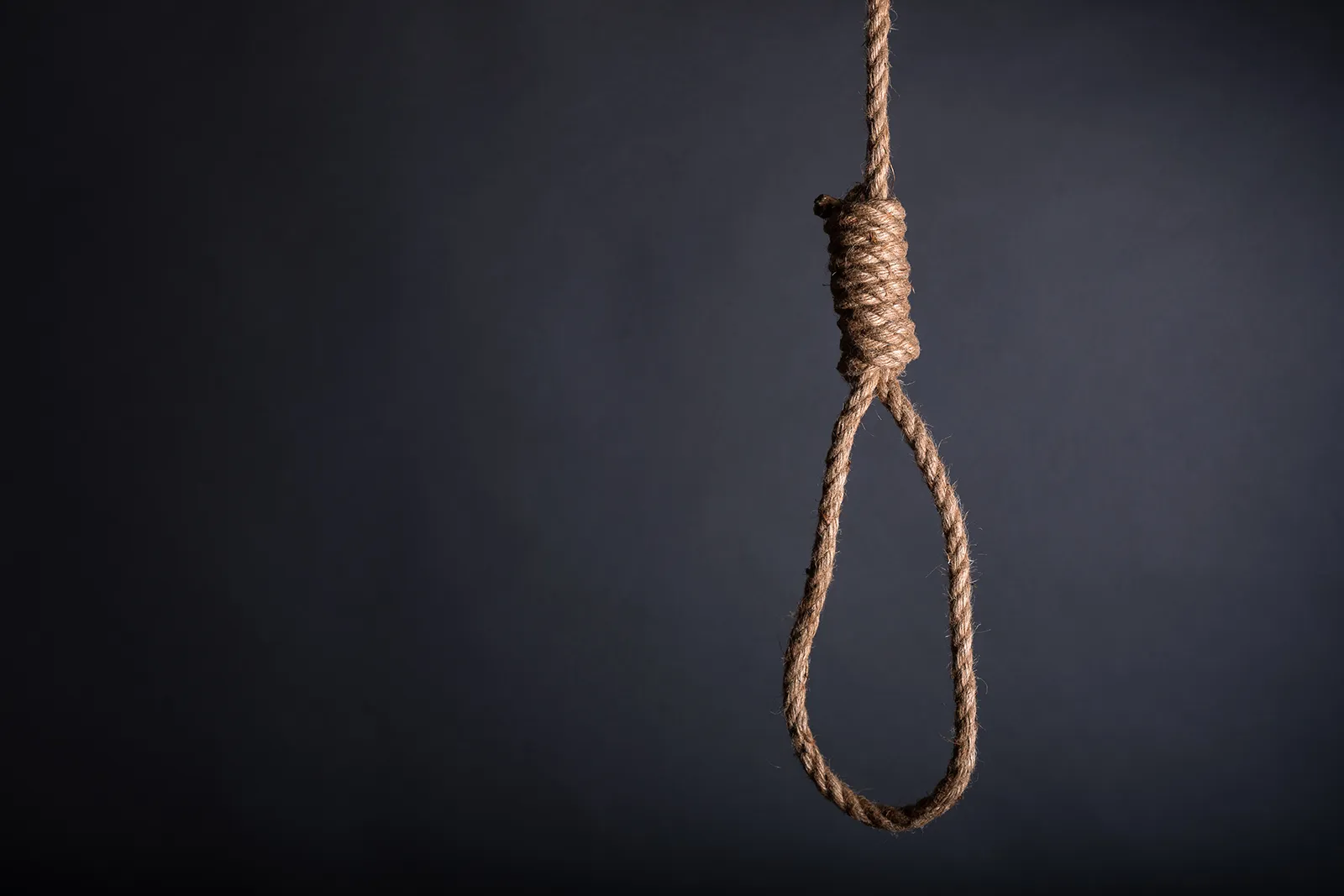
Black Americans Do Not Commit Suicide by Lyching Themselves
Reading Time: 4 minutes
By: Lisa M. Hayes
If white women were being found hanging from trees in public places across the South, I believe there would already be a task force.
There would be cross-jurisdictional coordination. Investigators would be comparing locations, timelines, forensic evidence, methods, circumstances, and possible connections between victims.
National media would be asking whether there was a serial offender. Federal agencies would be under pressure to explain what they knew and what they were doing.
No one would think it was unreasonable to ask whether the cases were connected.
But Black people are being found hanging in America, and too often these deaths are being treated first as isolated incidents instead of as a possible pattern worthy of serious examination.
In September 2026, dozens of members of Congress asked the Department of Justice and FBI for a thorough, transparent, comprehensive federal investigation into the deaths of Black people found hanging across the country. Their letter cited at least 10 reported hangings of Black people in 2026 alone and called for independent autopsies, audits of local investigations, review of physical and testimonial evidence, and better national data collection.
That request should not be extraordinary.
America has a history.
A very specific history.
For generations, hanging Black people was not simply a method of murder. Lynching was spectacle. Terror. Social control. A warning delivered through a body to an entire community about who could be harmed and who could do the harming without consequence.
That history does not automatically tell us what happened in every one of these deaths.
But it does mean that a Black person found hanging from a tree in America does not exist outside that history.
And it means that families should not be expected to quietly accept a conclusion simply because an institution has placed the word “suicide” in a file.
I am not willing to casually accept suicide as the explanation for a Black person found hanging from a tree in public without exhaustive, transparent, independent investigation.
Not in this country.
Not with this history.
Not when families themselves are asking for more scrutiny.
And not when there are enough cases that members of Congress are now asking federal investigators to determine whether there is a larger pattern.
One recent case demonstrates exactly why scrutiny matters.
Tasia Fortune was 29 years old when she was found hanging from a tree behind an abandoned home in Jackson, Mississippi, in August 2026. Her death was ultimately ruled a homicide. A man has been charged with her murder, and investigators have said the case remains active. Authorities have not identified a racial motive.
That does not tell us what happened in every other case.
It tells us why investigation matters.
It tells us why the first explanation cannot automatically become the final explanation.
And it tells us why families who say, “Something about this is wrong,” deserve more than dismissal.
There is something profoundly unequal about which patterns America instinctively recognizes as patterns.
If white women began turning up hanging from trees in public places across multiple states, I do not believe we would wait until someone proved the cases were connected before treating the situation as potentially connected.
You do not establish a task force because you already know there is a serial offender.
You establish one because enough unusual deaths have occurred that somebody needs to ask whether there is one.
Black families deserve that same standard of care.
They deserve the same curiosity.
The same urgency.
The same forensic seriousness.
The same unwillingness to explain away the deaths of people they love before every reasonable question has been answered.
Maybe these cases are unrelated. Maybe some involve homicide without a racial motive. Maybe investigators will find connections we do not yet understand.
That is what investigation is for.
We do not need to know the answer before asking the question.
We only need to believe that Black lives are worthy of the same institutional attention we would demand for anyone else.
Because in a country with America’s history of lynching, a Black person found hanging from a tree is not simply a body at a scene.
It is a death occurring inside a history.
The dead deserve to be investigated with rigor.
Their families deserve to be treated with care.
And the rest of us deserve to know whether we are looking at isolated deaths or something we have failed to name.
Rest in power
Javion Magee.
Jayvon Givan.
Dennoriss Richardson.
Mario Kaiser Jr.
Earl D. Smith.
Demartravion “Trey” Reed.
Torrance “Tory” Medley.
Kyle Bassinga.
Juliana Umba Nzita.
Cedric Longanga Tayuhe.
Tonea Nicole Miller.
Justice Kai James.
Jerard “Jay” Jackson.
Tasia Fortune.
Demetrius Eugene Fleming.
And the Black man whose name has not been publicly reported who was found hanging in Raleigh, North Carolina, in August 2026.
And the man whose name has not been publicly reported who was found hanging in a wooded area of E.P. “Tom” Sawyer State Park in Louisville, Kentucky, later that same month.
This list may not be complete. That is part of the problem.
May your names be remembered.
May the unnamed be named.
May your families be heard.
May every unanswered question be taken seriously.
AI disclosure: I used AI as a research and editing partner on this piece to help locate reporting, compare publicly available information, organize the documented cases, and refine the writing. I reviewed the claims and sources before publication, and the conclusions and opinions expressed here are my own. Because these are real people, real families, and ongoing questions, I have tried to distinguish carefully between confirmed facts, official rulings, disputed conclusions, and what remains unknown.
Lisa Hayes is a life coach, writer, and editor of Confluence Daily, specializing in social issues, political issues, and mental health. Her work has appeared in publications like Huffington Post and Real Simple. She is also the Communications Director for a local fire department in Mexico and runs a life coach training program called The Coaching Guild.