
I’d like to reach a point where chemo chic is not a beauty standard.
Over the last several weeks, I have watched people enthusiastically celebrate the weight loss of women who have lost weight because they are undergoing cancer treatment.
Cancer treatment.
Women whose bodies are enduring chemotherapy, illness, exhaustion, fear, and the enormous physical and emotional demands of trying to survive are being congratulated for getting thinner.
It fucking haunts me.
We have become so conditioned to celebrate a shrinking female body that we frequently fail to ask what is happening to the woman living inside it.
We see the weight loss before we see the suffering.
We offer congratulations before we offer concern.
And somehow, even cancer can become an occasion to compliment a woman’s appearance.
I am a woman in my fifties. I come from a generation of women who were among the first to encounter the commercial machinery of eating disorder treatment as it grew into an industry.
We grew up with diet culture embedded in practically every aspect of our lives. We watched our mothers diet. We watched celebrities get publicly humiliated for gaining weight. We learned to count calories, measure portions, fear carbohydrates, and regard the number on a scale as information about our worth.
Some of us developed eating disorders. Some of us spent years recovering from them. Some of us learned to call our compulsions discipline, our hunger a character flaw, and our exhaustion the price of being beautiful.
And somewhere along the way, we started trying to find this mysterious intersection of self-love, health, and desirability.
We wanted to love our bodies, but we also wanted to change them.
We wanted to be healthy, but we had been taught to recognize health primarily by how it looked.
We wanted to be free of the relentless scrutiny of women’s bodies, but we had internalized the scrutiny so completely that we rarely saw it in ourselves.
Then the language changed.
Dieting became wellness. Restriction became clean eating. Thinness became fitness. The pursuit of a socially acceptable body acquired a new vocabulary and an impressive collection of moral justifications.
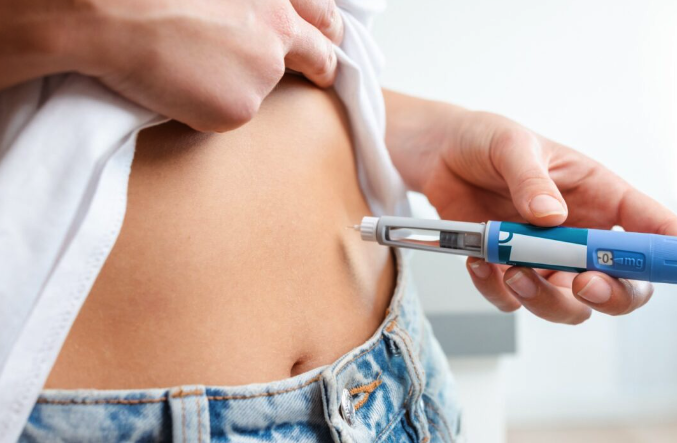
Now we live in a world where weight loss can increasingly be purchased in the form of a prescription, an injection, or a pill.
I am not judging the medical decisions any woman makes. I am not here to condemn women who use these medications. People have complicated relationships with their bodies, and they deserve access to medical care without being subjected to another round of public judgment.
I am deeply concerned about what happens when powerful new medical tools enter a culture that was already obsessed with making women smaller. I know more than one woman within a normal BMI range who is using mail-order weight-loss drugs without ever seeing a doctor to talk about her health, to get thinner.
The availability of a treatment does not magically liberate us from the beliefs that shape our desire for it. If anything, I worry that we have made thinness feel more compulsory than ever.
If losing weight is now medically possible for more people, what happens to the woman who doesn’t want to? What happens to the woman who cannot afford to? What happens to the woman whose body changes with age, illness, disability, menopause, grief, medication, or simply the ordinary business of being alive?
We know what happens. We are going to find yet another way to tell her that her body is a problem she has failed to solve?
I want us to examine how easily we have confused weight loss with health, attractiveness with well-being, and thinness with some vague idea of personal achievement.
Because weight loss is not a diagnosis.
It is not proof of health.
It is not evidence that a woman is happy, thriving, disciplined, or finally at peace with herself.
Sometimes it is the result of deliberate choices that improve someone’s health.
Sometimes it is the result of illness, stress, poverty, depression, medication, or profound physical suffering.
Sometimes it is nobody else’s business.
And sometimes the woman you are congratulating for getting smaller is fighting for her life.
We have got to find a path to self-love that does not require us to travel through a weight-loss journey first.
We have got to learn how to talk about health without treating thinness as its most reliable evidence.
We have got to stop making a woman’s appearance the most interesting thing about her, even when she is navigating something as devastating as cancer.
And those of us who have spent decades negotiating the impossible demands placed on women’s bodies have an opportunity to refuse to pass this particular inheritance along.
I don’t want another generation of women spending half their lives trying to become small enough to feel worthy of inhabiting the other half.
I want women to have access to excellent medical care, to nourishing food, to movement they enjoy, to pleasure, to rest, to strength, to autonomy, and to bodies they are allowed to live in without constantly evaluating them from the outside.
I want us to become genuinely curious about women’s health, rather than endlessly fascinated by women’s weight.
I want us to celebrate a woman without first assessing the size of her body.
And I would really, really like us to reach a point where chemo chic is not a beauty standard.
A woman surviving cancer is not a weight-loss success story.
She is a human being whose life is infinitely more interesting and valuable than how much space her body occupies.
We should have learned that by now.
Lisa Hayes is a life coach, writer, and editor of Confluence Daily, specializing in social issues, political issues, and mental health. Her work has appeared in publications like Huffington Post and Real Simple. She is also the Communications Director for a local fire department in Mexico and runs a life coach training program called The Coaching Guild.